
Author: Aishath Shaufa Ahmed Steps towards the abolition of the death penalty in countries or imposing a moratorium on its use are common. Yet, it leaves us to wonder how countries that impose capital punishment legitimize it. The death penalty is presumed to serve objectives such as deterrence and retribution. Ideally, it is expected toContinueContinue reading “How do countries legitimize the death penalty?”
Category Archives: human rights
Would murder and terrorism constitute ‘most serious crimes’?
By the year 2020, a total of 108 countries have abolished the death penalty. The countries that have abolished the death penalty believe it is a cruel, inhumane and degrading form of punishment. The International Covenant on Civil and Political Rights (ICCPR) recognizes the right to life. Article 6 subsection (1) of the ICCPR provides that every human being hasContinueContinue reading “Would murder and terrorism constitute ‘most serious crimes’?”
Doctrine of Caveat Emptor

Caveat Emptor – derived from word ‘caveat’ (i.e. may he beware) + ‘emptor’ (i.e. buyer). It is a Latin term which means ‘‘let the buyer beware’’. According to this rule, the buyer himself should be careful while purchasing the goods and he should himself ascertain those goods suit his purpose.
Education & Guidelines for LGBTQA+

LGBTQA rights have been a topic of discussion for a long time around the world and has gained a lot of importance in India recently. It was only in 2017, when people of the LGBT community were allowed to express their sexual orientation under the Right to Privacy under the Indian Constitution. The Right to Privacy was declared a fundamental right in the same year in the historic KS Puttaswamy versus Union of India (SC, 2017) case.
Climate change, agriculture, and sustainable development

Climate change has always been a prevalent phenomenon. Ice Ages testify for the existence of cyclic climate change. These climatic variations have steered extreme weather conditions globally. Climate change has a drastic effect on agriculture through increasing temperatures, varying precipitation patterns, loss of diversity, etc. The pressing need for sustainable agricultural developments is being recognized and its foundations have been laid down in the 2030 Agenda for Sustainable Development.
Human body material trafficking or illegal organ trading

In 2016, a case of Sundar Singh Jadhav got viral because of he had disclosed about a famous kidney racket at Mumbai’s Hiranandani hospital. He had been the key witness to the trafficking happening there. His death in January 2019 made it to the news because no suicide note was found at his place but according to the police financial stress and domestic problems had been the reason behind his death
Socio-Legal aspects and provisions for Live-in Relationship in India

‘Live-in Relationship’ as defined in Alok Kumar v. State: “Live-in relationship is a walk-in and walk-out relationship where neither any strings are attached, nor does it create any legal bond between the parties. It is a contract of living together which is renewed every day by the parties and can be terminated by either of the parties without the consent of the other party and one party can walk out at will at any time.”
Kelsen’s anatomization of United Nation
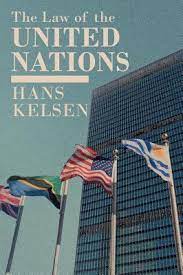
In order to analyse the working of the UN and point out its limitations, in 1950, Kelsen Published ‘The Law of United Nations’ in this book he analysed the different aspects of the functioning of the organs of the United Nations with a juristic approach. Kelsen applied positive jurisprudence of law while writing this book when he affirms that the book deals with the Law of the Organisation as it is and not with its desired role in International Law.
The book has thoroughly revised the entire working model of the UN on the premise of the UN Charter, according to its making and the ideas expressed in it. However, not all of those ideas hold water today as these bodies have defined their roles over the decades.
The Ethical Dilemma of Abortion – Its Legality in India and Anti-Abortion Laws
Abortion laws and their enforcement have fluctuated through various eras. In many western countries during the 20th century, for example in 1929, the Infant Life Preservation Act was passed in the United Kingdom, which amended the law (Offences against the Person Act 1861 and South Africa allows abortion on demand under its Choice on Termination of Pregnancy Act and these movements were successful in having abortion bans repealed. While abortion remains legal in most of the West, this legality is regularly challenged by anti-abortion groups.
Blog Series: Israel-Palestine Conflict through the Lens of Right to Self-determination
Israel-Palestine conflict has come to a complicated juncture where the idea of only one State in the region, either Israel or Palestine, would be near to impossible. Many countries like USA and India also supported the two-nation theory to end the conflict. Now is the time for Palestine and Israel to relinquish the idea of violence and search for alternative course of action.
 Indian Society for Legal Research